
House District 52 covers all of Richmond County.
Incumbent Republican Rep. Ben Moss will face Democrat Joe Parfitt this November.
Moss did not respond to our candidate guide questionnaire.
If we receive his response, we will publish it here.
Joe Parfitt (D)
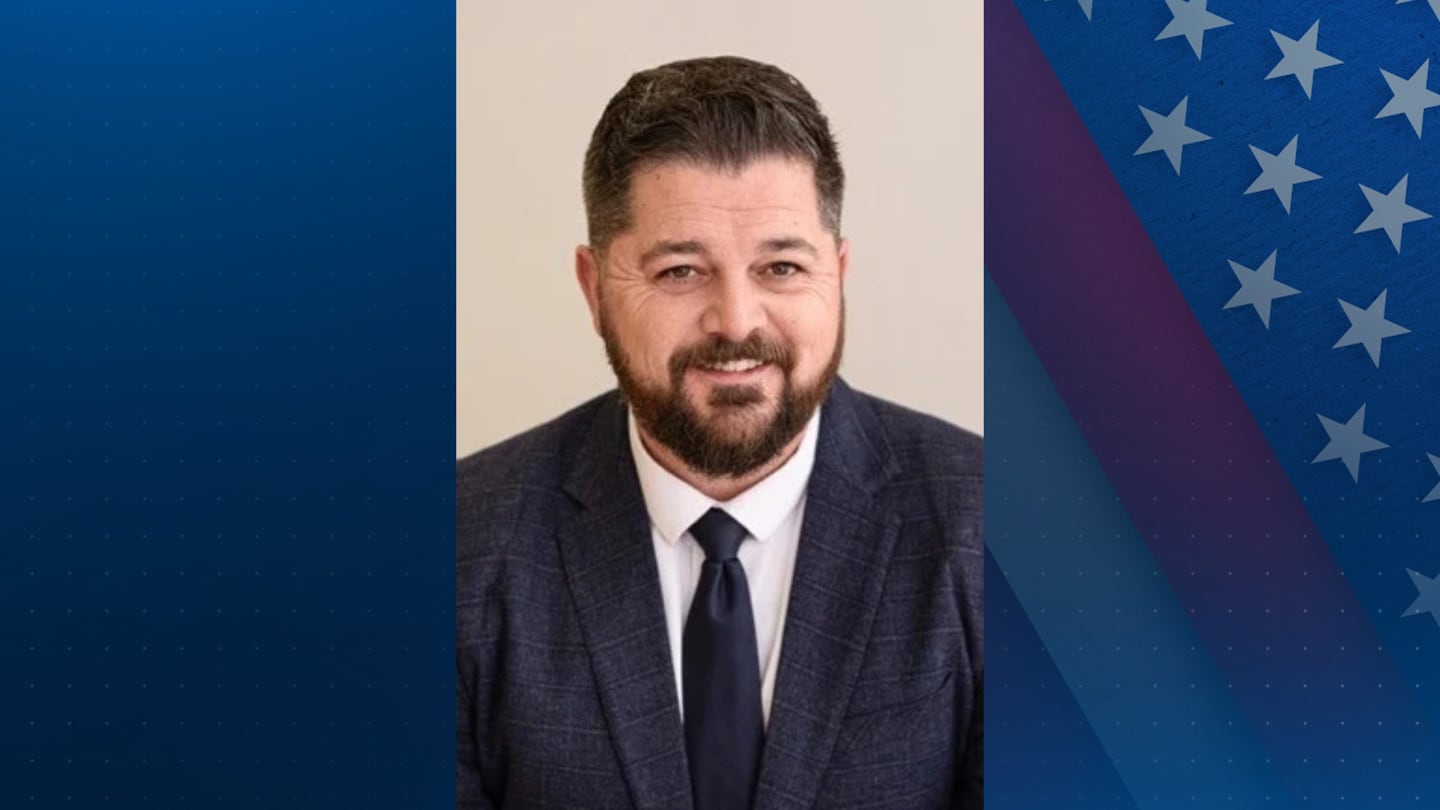
Why are you running?
I initially entered this race because, as a teacher, I know that our schools are not fully funded. The fact that our legislators passed HB 10, giving public money to private schools to the tune half a billion dollars taken from our public school budget was a bridge too far. It was only after receiving my party’s nomination that I became aware of the issues of data centers, to which I am adamantly opposed. Additionally, the implementation of Flock cameras (ALPRs) became effective at the same time, a fight against which I am equally a part of.
Are you in favor of the three constitutional amendments on North Carolina’s ballot? Why or why not?
Absolutely not.
Concerning the first proposed amendment: NC already requires photo ID. This amendment makes it permanent without guaranteed protections for voters with barriers to the ballot box, and could make it more difficult for disabled voters, seniors, low-income voters, students, and rural residents with limited access to ID services.
As to the second amendment to keep the State income tax rate from being raised higher than three and one-half percent (3.5%), the income tax is already scheduled to go below 3.5%. This would permanently lower the maximum state income tax rate, making it harder to ask wealthy people and corporations to contribute their fair share in the future. That limits funds for critical services like schools and public safety.
Finally, the third amendment requiring limits on property tax increases by local governments doesn’t lower your current property tax. It limits how much local property taxes can be increased, but leaves details up to the legislature. Local governments may not have money to pay for critical services like schools, emergency response, or rebuilding after a natural disaster.
What should the state do about data centers?
First, a moratorium on all permitting, building, or continuing construction of any data center that is not currently online needs to be enacted. A comprehensive study on the environmental, economic, public health, and resource usage impacts and long term effects must be completed by a bipartisan committee, as well as appropriate legislation, before said moratorium should be lifted.
As for legislation concerning the centers, certain protections for the people, the towns, and the counties must be codified into law. This concerns the tax of land and components used (which will be made more difficult if the second and third proposed amendments are passed), in addition to the rate at which electricity and water are used, and that major industries should bear the financial burden of utilization of these resources. The data centers will also need to be required, by law, to acquire and maintain any and all sound and pollution meters, which will be subject to inspection by regulatory authorities. All of which must have a forcing function of serious fines, fines that cannot be shrugged off as a rounding error by corporate accountants, with serious infractions resulting in the center being turned offline until compliance is met. Accountability must be maintained. North Carolina is considered one of the best states for corporations. This is because our legislators have allowed them to get away with serious crimes. Chemours is only now being held to account for their PFAS contamination, and only because of the determined efforts of our Attorney General. We need to do better for the residents of North Carolina and stop letting monied interests have priority over that of the citizenry.
CMS has faced numerous controversies over the past month, what, if anything, should state lawmakers do?
It is unclear to which CMS you are referring to. If it is the Charlotte Mecklenburg school situation that is unfolding, I have only just become aware of it, as it is far outside of my district.
If you are referring to Medicare and Medicaid (CMS.gov), I am very concerned about the cuts, stemming from the Big Beautiful Bill that will affect 600,000+ North Carolinians. I am strongly in favor of Universal Healthcare at a national level (though I will be unable to effectively pursue it as a state legislator). The reduction in SNAP benefits and lack of federal funding matching is going to result in a huge spike of negative medical statistics. One in four babies in North Carolina are funded by Medicaid. In my district it’s closer to 50%. The results are going to be increased medical debt, putting off preventative health screenings, medication rationing, and in the worst cases, deaths relating to lack of medical care. Additionally, our rural clinics and hospitals will be affected the most as they rely upon these funds. It is unsustainable and poor planning and it will hurt the most vulnerable of our neighbors the most.
What legislation will you pursue to bring down costs?
Unfortunately, there is very little I will be able to do about our biggest rising cost, fuel. That is an issue that stems directly from the strategy-less war against Iran, and if we turn out and vote and get Roy Cooper, Colby Watson, and Richard Ojeda into Congress, the power of this administration will be curtailed, and the war will end, easing the fuel crisis.
The next cost that has risen dramatically is electricity. This I CAN affect. Duke Energy cannot lobby me. I refuse to be swayed from my commitment to reign in their out of control rate increases. These rate increases stem from the infrastructure improvements necessary for the data centers. These issues are connected, and (as per Senate Bill 266) you and I, people who pay their home electric bill, bear this financial burden. Attorney General Jackson has been working to bring those costs down, but as a legislator, I need to be a part of that. We need greater protections from their abusive monopoly on a public utility.
What sets you apart from your opponent?
My opponent was elected in 2020. In 2021 he purchased 197 acres in our district for $200,000. In 2025 he sold that land to Terra Nexus in order for it to be developed into a hyperscale data center for $1.2 million dollars. He has claimed he was unaware that it was going to be a data center. What sets us apart? I know data centers will not benefit our constituents, and will do everything in my power to prevent them in my district, and the state. He became a millionaire literally selling out his district to one.
I am a teacher who believes that public education is one of the crown jewels of this American experiment. Horace Mann called it “the great equalizer,” allowing anyone, regardless of the situation they were born into, to be able to improve their lives. A public school must take every child in their district regardless of their wealth, faith, race, or ability. They are public services that create a public good. Our constitution guarantees every child the opportunity to receive a sound basic education through a uniform system of free public schools. Yet we underfund them. North Carolina is fiftieth in the nation for dollars spent per student. (When the Republicans assumed control of the legislature, 16 years ago, NC was 25th) My opponent voted to defund our public schools, in favor of private schools’ “opportunity vouchers,”. Private schools can deny any student that they find undesirable or underfunded. It’s not a huge logical path to follow to see how this will result in a less-educated population. I went to a public school, as did my opponent, but only one of us has shown their appreciation to the hardworking educators that gave us so many precious gifts to be able to succeed as adults.
Since my determination to run I have attended every county commissioners’ meeting, town council meeting, and county school board meeting I possibly could. Given that my district comprises two counties and ten town councils, I often have to alternate meetings due to conflicting schedules. In the event I must miss a meeting a member of my staff attends it as a proxy. I feel that a state representative’s role is to take the concerns of the citizens from the counties to the capital. The only way to do this is to be aware of all of their issues. This is a practice I intend to continue when I am elected. Not only will it allow me to take their apprehensions to the capital, but to relay back to the local meetings first hand knowledge of the work being done in their behalf.
I have been attending these meetings for over a year. Neither I, nor my staff, have ever seen my opponent in person. Not at the meetings. Not at the town halls. Not at the parades. Not at the churches. Not at First Friday, or Springfest, or the Fourth of July celebration. The only time I have seen him is in a YouTube video from 2020. I have actively been trying to reach my representative for over a year. I have sent emails, made phone calls, and driven to his office in Raleigh on four occasions. I have never had a reply.
What sets me apart from my opponent is that I am actually here, in the community, listening to people’s concerns. They inform my decisions. I, or my staff, reply to every email, text, phone call and Facebook post (except, of course, the obvious trolls, though I have won a few of them over). If we want to improve our trust in government, we need to know the government. In that spirit, I am in constant contact with all of the candidates, up and down the ballot, that are running on the Democratic ticket. It is imperative that we are all aware of each other’s efforts to improve the lives of our constituents. Additionally, when a constituent has an issue that is outside of our purview, we can quickly link them up with the level of government that can address it.
©2026 Cox Media Group

/cloudfront-us-east-1.images.arcpublishing.com/cmg/LH3JSJEF3VBLRJLJQESEAG34AM.png)


