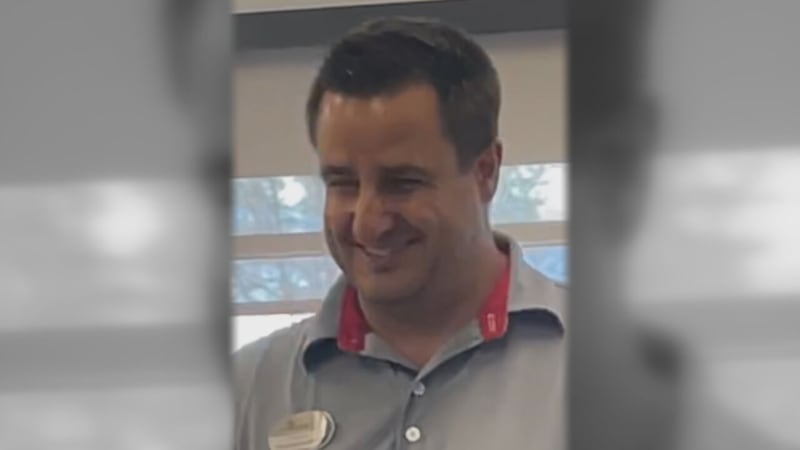
Daniel Carter, 23, said he turned to kratom to break his opioid addiction but instead, it pulled him right back in. Now sober, he and others are warning about the unregulated product found in gas stations and vape shops that is landing people in detox.
“I didn’t really know what kratom was,” Carter said.
He used kratom three years ago to beat an opioid addiction, but it became a problem for him.
“Nobody told me that there was any withdrawal symptoms or anything,” he said. “But then I ended up feeling the same way that I did whenever I was trying to come off of opiates. So, then ultimately, it just ended up leading me right back to using the drugs that I was trying to get off of.”
Carter is sober now and enrolled in Ground 40, a faith-based nonprofit in Union County that helps men turn their lives around.
“Over the past few months, we’ve actually had an influx of people who are dealing with kratom,” said Wesley Keziah, the executive director of Ground 40.
Keziah said he posted a warning on social media recently not to condemn, but to inform others about kratom.
Kratom products are labeled as a supplement used to help treat depression, fatigue or pain.
They have no warnings and are readily found at gas stations in various forms, including pills and in liquid.
A small bottle of kratom cost about $20.
Keziah said he’s had to take some of his men to detox centers for their kratom withdrawals.
“The withdrawal looks a lot like an opioid withdrawal,” said Dr. Logan Adams, the medical director and McLeod Centers for Wellbeing.
He said they’ve seen an uptick in people seeking their centers for treatment for kratom addictions and withdrawals.
The FDA does not support the use of kratom because some studies have found it can cause serious health risks, including seizures, liver toxicity, and substance use disorder.
The FDA action “is not focused on natural kratom leaf products,” according to a statement Tuesday by the U.S. Department of Health and Human Services.
The agency said it was releasing a report to educate about the risks of “7-OH and its distinction from the kratom plant leaf.”
Carter thinks more should be done to protect others.
“There’s warning label on cigarettes, nicotine, all types of things,” he said.
Keziah said he’s working toward change.
“I believe the best way to start is just a warning, just to warn people of the dangers of this seemingly innocent thing,” he said.
The American Kratom Association has long lobbied Congress to block stricter regulations on kratom, backing legislation that would prevent the FDA from treating it more harshly than dietary supplements. In recent years, the group has also pushed for state-level laws targeting synthetic 7-OH kratom products.
There are 24 states and the District of Columbia that regulate kratom.
North Carolina could join them if lawmakers pass House Bill 468.
The measure would regulate kratom under the authority of the state’s Alcohol Law Enforcement Division.
It would ban its sale to people under 21, require warnings on the packaging, and require retailers to purchase a license to sell it.
Violators could face steep fines.
State Rep. Jeffrey McNeely, R-Iredell, sponsors the bill and told Channel 9 it could come up again in the short session next year.
VIDEO: 9 investigates Kratom: Natural herb or deadly drug?
©2025 Cox Media Group
/cloudfront-us-east-1.images.arcpublishing.com/cmg/LH3JSJEF3VBLRJLJQESEAG34AM.png)