STANLY COUNTY, N.C. — A first-of-its-kind emergency training center in Stanly County is giving North Carolina first responders a realistic way to prepare for deadly flood rescues before the next disaster strikes. The $87 million facility features a five-million-gallon reservoir, a mock river channel capable of producing 200,000 gallons of water per minute and a simulated flooded village where rescue teams train for fast-moving water emergencies similar to those seen during Hurricane Helene.
Highway Patrol Swift Water Rescue Commander Lt. Sean Johnson said the center eliminates training challenges caused by drought and limited river access while helping rescuers safely master boat operations and flood response tactics.
0 of 9
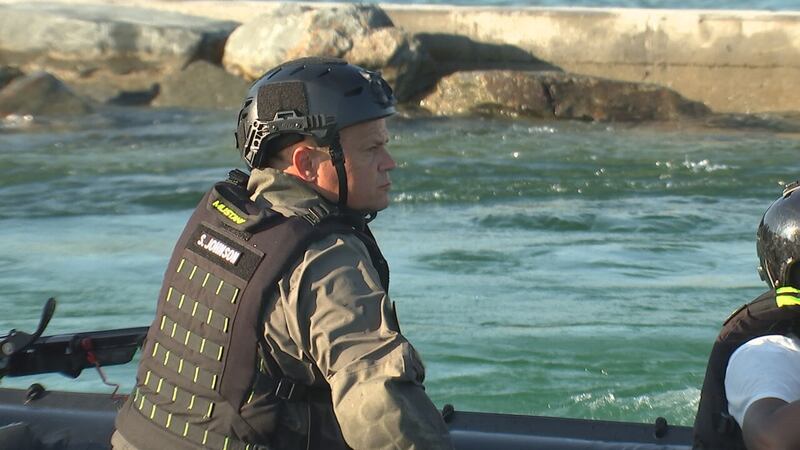




Johnson has responded to disasters from the coast to the mountains over several decades.
“We deal with a lot of wide-area flooding, whereas what we saw during (Hurricane) Helene was very violent, turbulent water,” Johnson said.
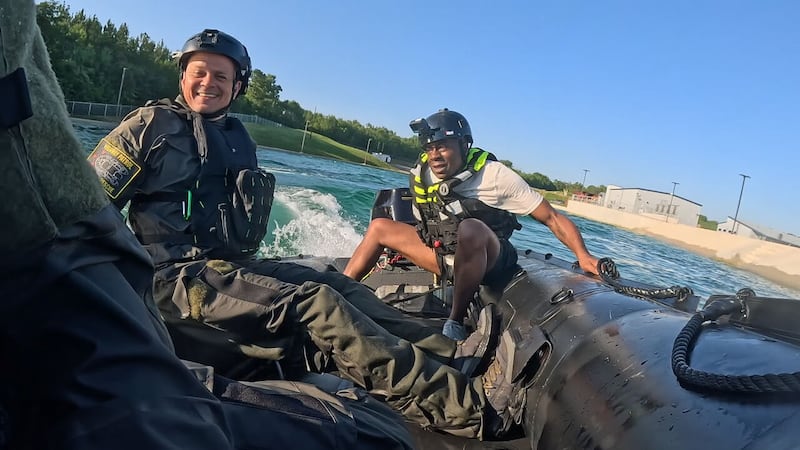
Channel 9’s Jonathan Lowe witnessed it firsthand covering the storm in Asheville as rescuers fought the current for two hours to save the man on a small piece of land, surrounded by rising floodwaters.
“At the flip of a switch, these guys can turn these on and give us 200,000 gallons a minute,” Johnson told Lowe at the North Carolina Emergency Training Center.
Johnson, a former firefighter, commands Highway Patrol’s Swift Water Rescue Unit.
“This is the Highway Patrol’s first time being here,” Johnson said.
The center began training first responders this summer.
They showed Lowe a highly detailed, mock river channel fed by a five-million-gallon reservoir.
“The violent flood, the current that it produces enables us to train people in those types of environments, when you go to local rivers, a lot of the times, it’s slow-moving water,” Johnson said.
Training specialist Jeremy Edmonds told Lowe that in the past, teams typically traveled to the North Carolina mountains to train, which can be complicated.
“We were limited as far as water availability because of drought, or conflicting schedules with recreational use,” Edmonds said.
“We’ve had to cancel training programs out there because of the lack of water,” Johnson said.
Johnson explained that the mock river channel can produce very “rapid-moving, turbulent water.”
“It teaches first responders how to read the water, recognize what it’s doing, and then how to navigate that safely,” he said.
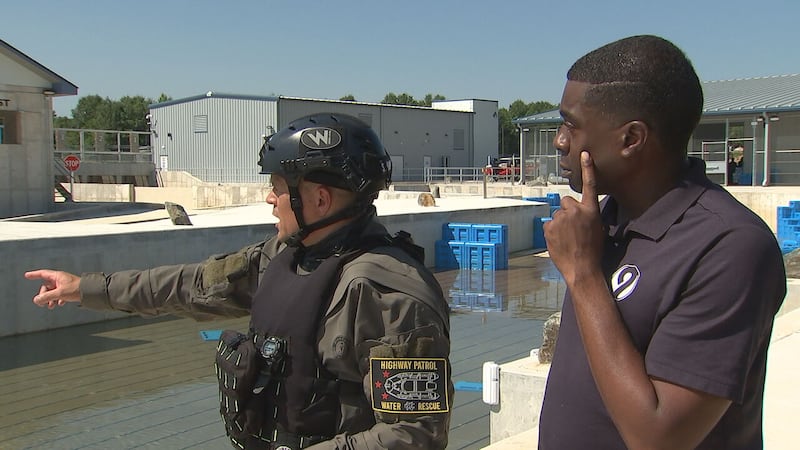
“The Village” is at the center of the channel, which is meant to simulate a flooded urban area.
“Some people get out, get on top of the roof,” Johnson said. “Some people stay in the house and start climbing on couches, countertops, and then they end up in the attic. And if you look right here at this building, No. 2, with a ladder on the back, you’ll see a pitched roof on that one.”
Each gate can push out 50,000 gallons of water a minute. It creates a real-life scenario downstream when they are all open.
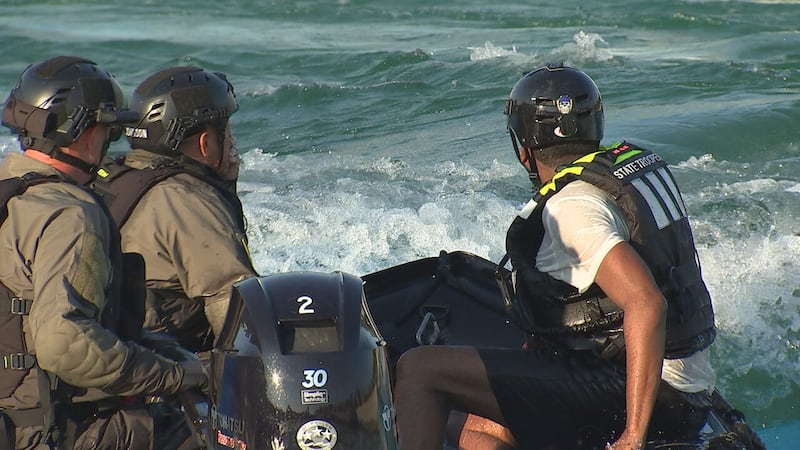
The Channel 9 crew and first responders loaded into a motorized inflatable boat, which is designed to navigate debris-filled, fast-moving water.
Johnson said the training teaches rescuers to handle water emergencies safely and professionally.
“I want to see them master boat operations, because during flood times, you can easily lose control of a boat,” Johnson said.
“With the consistency of the training that they’re getting here, it makes it easier for these teams to work together in an event like Helene,” Edmonds said.
The facility is the only one of its kind.
“There is no place like this in the world that exists right now,” Edmonds said.
The facility is operated by the state fire marshal’s office and was funded through a partnership with the state’s Air National Guard and Stanly County.
©2026 Cox Media Group

/cloudfront-us-east-1.images.arcpublishing.com/cmg/LH3JSJEF3VBLRJLJQESEAG34AM.png)


