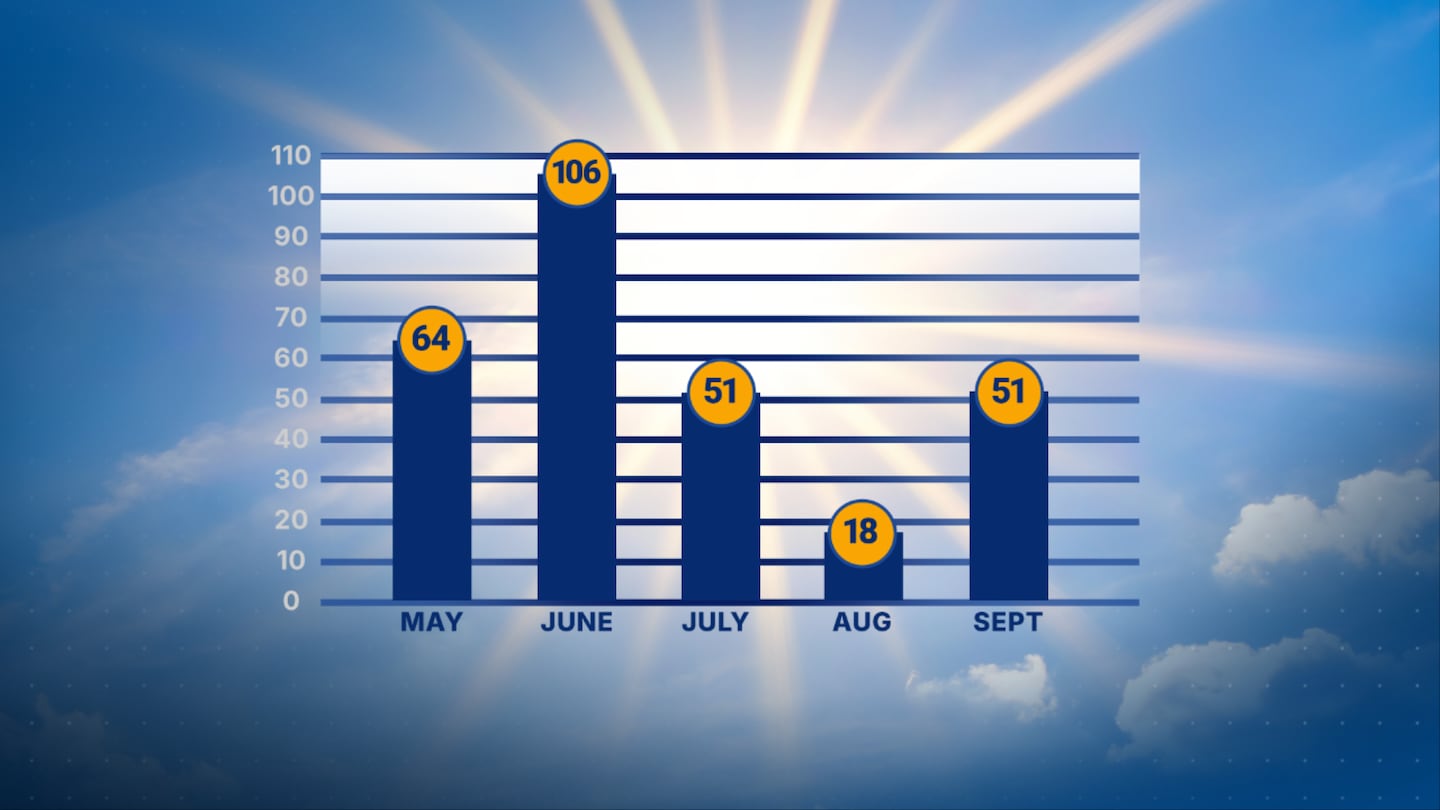
CHARLOTTE — Channel 9 obtained records for every heat-related call Mecklenburg EMS received between May and September, which includes illnesses like heat stroke, severe dehydration, and heat exhaustion.
For 2026, there were 343 total calls and 290 patients treated on scene or transported for medical care. Many of MEDIC’s busiest days came during extreme heat or major summer events
Corey Davis, the assistant state climatologist, said the higher volume of calls isn’t surprising. 2026 was the fifth warmest summer on record for Charlotte, and much of that heat came early and stuck around a while.
“Charlotte saw its first 90-degree day back in the middle of April,” he said. “That was the earliest that had happened in 16 years, and the latest 90-degree day happened in the middle of October. That was the latest on record for the Charlotte area.”
While July and August were our hottest months, Davis said it’s typical for a warm May and June to put a surprising amount of heat stress on our bodies.
“Our bodies lose that tolerance to heat,” he said. “So this year, for instance, we started seeing those 80- 90 degree days in April and May. Folks who may have thought they were used to those kinds of conditions found that when they got outside, it was creating stress more easily.”
The days with the highest number of calls tended to occur later in the summer when high temperatures were 95 or higher. Many were in the middle or end of a prolonged heat wave.
July 3rd and August 16 were tied for number one at 21 calls, then there was July 17 with 16 calls, July 4 with 11, and September 5 with 10.
“Even folks who had been outside over that previous week and might have thought they were used to conditions that hot found that just being exposed to that day after day after day meant that the stress came on sooner than maybe they expected,” Davis said.
The data also shows a few clusters of calls.
On August 16, the day of Charlotte Pride, there are several heat-related calls in Uptown. Similarly, on July 17, there are several calls near Bank of America Stadium, which was hosting a concert.
“That tells us that a lot of our friends and neighbors are not used to temperatures like that, and maybe those are the only days during the summer where they’re getting out to big events,” Davis said.
MEDIC explained the agency works with the city to identify events that could cause a spike in calls, and they use a special events team to cover them. This ensures there are plenty of first responders on site to assist with emergencies while there are still plenty of ambulances available for other calls.
Most of those days with high call volumes had heat advisories issued. Davis said that shows the alerts line up with the highest risk days, but the number of calls shows there’s still work to be done.
“We could probably do better in terms of communication,” he said. “That means telling them what impacts they’re likely to feel on their bodies, what those signs of heat exhaustion look like.”
©2026 Cox Media Group


