GASTON COUNTY, N.C. — Exposed riverbeds are showing up where feet of water should be along the Catawba River, and for the first time in nearly two decades, all of the communities along the river are entering stage two drought protocols.
One thing that’s changed since the last time the drought was this bad: a big change in the region’s population.
Channel 9 Climate Reporter Michelle Alfini spotted the water receding away from a pier that’s usually floating in the Catawba River at Kevin Loftin Park in Belmont. Folks nearby say it hasn’t been this dry in nearly 20 years.
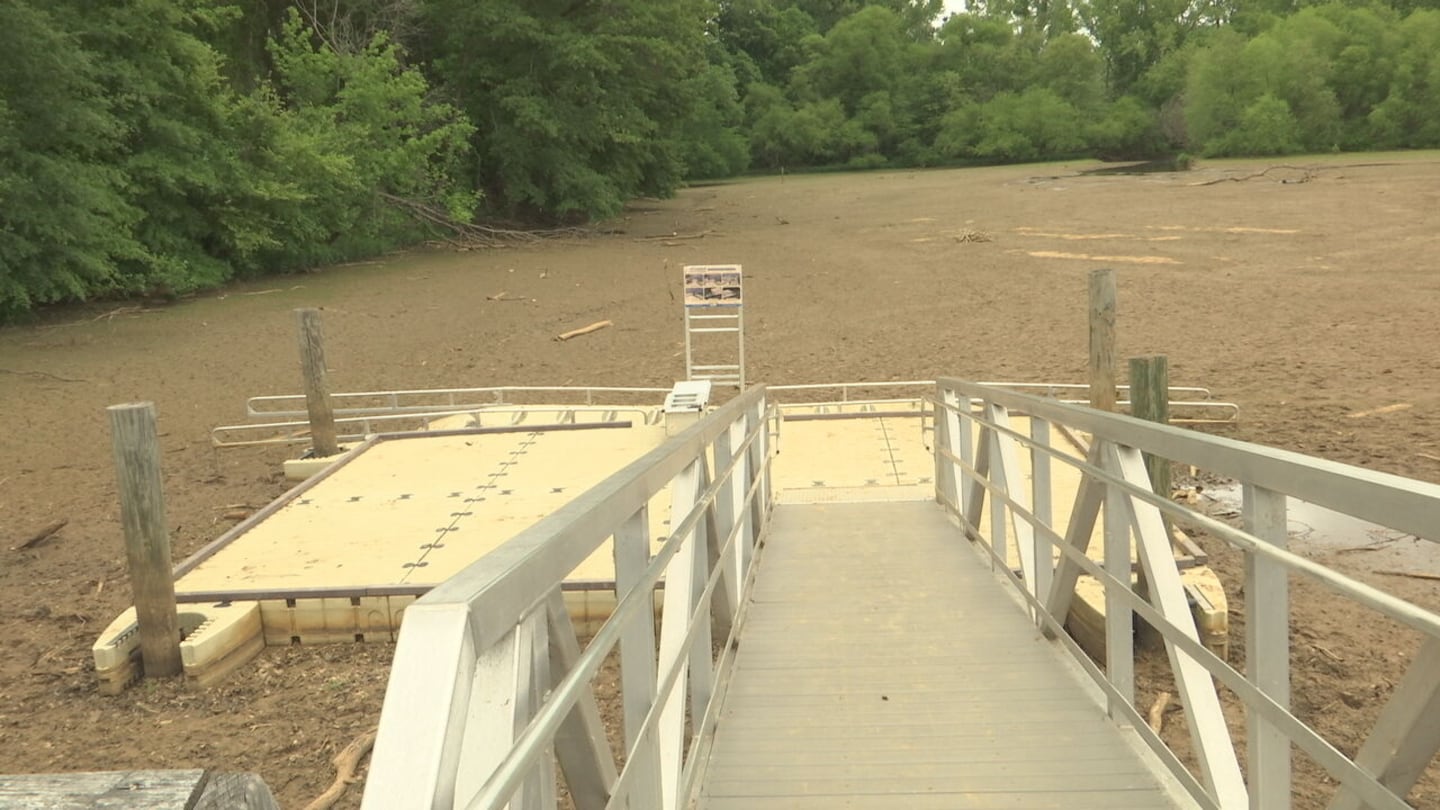
“This is normally shallow, I’ve never been able to see land over here, though,” said Jessica McPhee.
The Catawba Riverkeeper, Brandon Jones, says this is a record low for water coming into the river for this time of the year.
“It is unusual to get into it this early into the summer. So that’s got everybody very concerned,” Jones told Channel 9.
That’s why he says the river system entered stage two of its low-inflow protocol. That triggers mandatory water conservation measures over the next two weeks.
“The only way out of a drought is rain so no amount of water conservation is going to fix this problem. What it does is it stretches out the time that we have for it to rain,” Jones said.
We haven’t had a test like this since the 2007-2008 drought.
“It’s very uncommon along the Catawba to go even beyond that stage one level,” said state climatologist Corey Davis.
Davis says that historic drought in the 2000s escalated in the summer, when temperatures and water use were at their highest. This year, we haven’t yet hit those hottest months. Jones also said more people and industries are sharing that water.
“Data centers are, again, a new thing that’s happened since we made these rules in 2008 and 2009, so that’s one question,” Jones said. “Do we need to update these rules for different types of industries that are coming along?”
Jones says he’s hoping for more transparency among high water use industries, so we know where and how to cut back. Until then, Jones says we need to cut back where we can.
“Everything that we can do now will help stretch that out, because that’s what we’re doing, we’re trying to buy time for rain,” Jones said.
©2026 Cox Media Group

/cloudfront-us-east-1.images.arcpublishing.com/cmg/LH3JSJEF3VBLRJLJQESEAG34AM.png)


