Most emergencies start with a 911 call and often end with an ambulance ride, but in Mecklenburg County, Medic has been trying to cut down on “unnecessary” transports to the hospital.
The agency identified 680 people who account for about 8,000 transports a month.
"These are the folks who fall through the cracks in the system," said Medic deputy director John Studnek.
He told Channel 9 that the agency started a program two years ago to address the issue and that many of those 680 people are using EMS to manage a medical condition. Some don't have access to the right care and some are homeless.
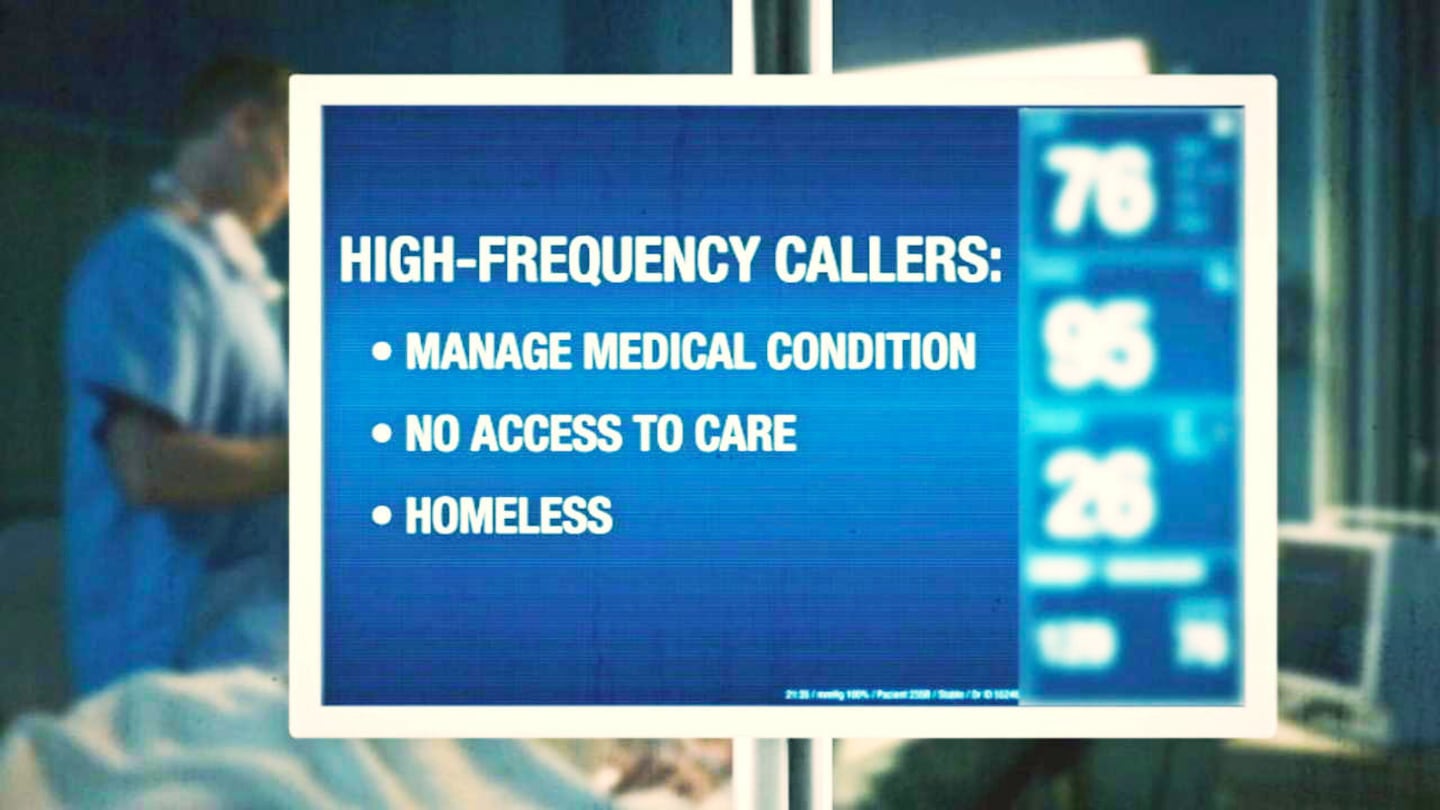
Medic partnered with agencies across the county that can assign their workers to intervene on behalf of those patients. Studnek said their plan is working and highlighted the case of a homeless man who used to call 911 an average of 20 times a month.
"We placed him in community support housing and since that time he has not been transported by ambulance to the hospital in the last eight to 10 months," said Studnek.
Keren Pelletier works to help the homeless population in Mecklenburg County. Medic asked her to organize a group called the "High Frequency Collaborative," which is made up of multiple agencies working together behind the scenes.
"They (case workers) are going out to the home, meeting with them there," said Pelletier.
The group currently has the manpower to help 22 patients at any given time, but they want to do more. Members meet each month to give updates on patients' progress and how many times they've called for Medic.
List of agencies involved in the program:
- Medic
- Community Support Services
- CMPD
- Charlotte Housing Authority
- Homeless Service Providers
- Behavioral Health Charlotte
- Cardinal Innovations (LME)
- Community Care Partners of Greater Mecklenburg
- Hospital Systems
- Department of Social Services
The group celebrates when they start to see major improvements.
"Especially when it says ‘zero transports’ and it's not because they've been admitted to the hospital or that they've been in jail, but because the intervention has worked,” said Pelletier. “Every intervention has been different for every patient."
Each patient will stay in the program for about eight months before they are taken off the list.
Studnek said they are funding the program out of money already identified to operate their system. He said they are choosing to "act smarter on behalf of our patients."
Medic currently transports three fewer patients a day because of the program and Studnek said he hopes to see that number grow in the future.
"All of a sudden they have resources that they've been looking for, and they don't necessarily know how or why they got there, but they are being better served,” he said.
Inspiring other agencies across the country
In 2016, Medic won an award from the National Association of County Organizations of Commissioners. Leaders said they've taken their research and shared it with other agencies across the country.
Channel 9 learned that officials in San Antonio, Texas, started a similar program in 2014. Paramedic Chris Velequez said their program is called “Mobile Integrated Healthcare.”
Even though both programs are different, both are focused on the new push for integrated health care.
San Antonio's program is funded through the city and is a division of the fire department. Similar to Medic, they also tap into resources throughout the area to help repeat 911 callers.
Instead of using case workers, San Antonio has a separate team of eight paramedics who are assigned to 60-80 patients at any given time.
Velequez said the team is visible in the community.
"For some of these high-volume utilizers, they are very sick. On occasion, we knock on their door and check on them, and sometimes they are in a crisis and we need to intervene immediately," he said.
Velequez told Channel 9 they also have a team that just focuses on daily needs of children and teens.
Since the program is funded by the city, it's shifted the way they've used taxpayer dollars for health care in the community.
Cox Media Group
/cloudfront-us-east-1.images.arcpublishing.com/cmg/LH3JSJEF3VBLRJLJQESEAG34AM.png)


