CHARLOTTE — Flock cameras have recently grabbed headlines for the wrong reasons, but despite their misuse, they’re also helping law enforcement solve cases, find missing people and track down suspects.
Channel 9’s Hunter Sáenz met with Gastonia Police Assistant Chief Nancy Brogdon at the department’s Real Time Crime Center for an inside look at how these cameras are being used there and examine the privacy concerns that come with them.
There, Brogdon played a video showing the moment Cedric Ford got out of his car and barreled over in pain after being shot. Gastonia police arrived just moments later. He tells them someone shot him in a drive-by.
“You know, this is a victim, and we’re trying to backtrack things,” Brogdon said.
She says the investigation quickly turned thanks to a Flock gunshot detection device, which only picks up the sound of a shot being fired. Minutes before Ford called 911 for help, it had already alerted officers that a gun had been fired.
The alert led officers to a nearby house, where the homeowner told them he shot Ford while trying to break into his home.
Channel 9 spoke with the homeowner in July. He never called 911, so without the Flock device, it’s hard to say if the truth would have come out.
“It has just, I think, empowered us to have the ability to solve crime quicker,” Brogdon said.
Feeds from all of their Flock cameras are inside the department’s Real Time Crime Center. As soon as officers hear the call for service, they start looking for cameras in that immediate area to see if they can capture the crime. They’re also able to feed that to the officers being deployed.
Currently, Gastonia has 27 live Flock cameras throughout the community, and 75 license plate readers. The plan is to put dozens more out there.
The technology has helped in theft cases and even helped find a missing 16-year-old with special needs.
PREVIOUS COVERAGE:
- K-9, cameras help capture suspect hiding in ceiling of Gaston County hospital
- Real Time Crime Center aids Gastonia Police in locating missing 16-year-old
Brogdon says implementing Flock in the department has saved them hours, and “possible days,” solving crimes.
“We are helping piece together puzzles to solve some of the most heinous crimes amongst us,” Jalen Johnson with Flock Safety told Sáenz.
Johnson also acknowledged the fact that some law enforcement officers have misused Flock cameras and systems.
“The misuse of any kind is horrible,” Johnson said. “It should never happen.”
In response, the company has created a transparency portal. In Gastonia, you can see all data for 30 days. It also shows things like the number of searches made in that time span.
Johnson says he understands the privacy concerns, but he wants to be clear about the capabilities of the technology.
“We are taking a point-in-time image of the back of a car, a public government document from a public roadway,” he said. “There is no personal identifiable information involved in that. There is no facial recognition involved in that. It is not continuously tracking the whole movements of a person like a GPS would.”
The Gastonia Police Department attributes more than 200 successful outcomes to Flock cameras. Brogdon says the benefits outweigh the costs.
“This is 21st century policing,” she said. “We have to stay with technology, and if we don’t stay up with technology, we’re behind the eight ball.”
Gastonia police began using Flock cameras in 2023. In July, it entered a 10-year, “Safe City” contract with the company.
According to their agreement with Flock, the city will have 130 total license plate readers, 70 live cameras and 158 gunshot detection devices installed in the community.
Both Flock and the Gastonia Police Department say they conduct routine, weekly audits to make sure officers are not misusing cameras.
Flock Concerns: Backtracking may be easier said than done
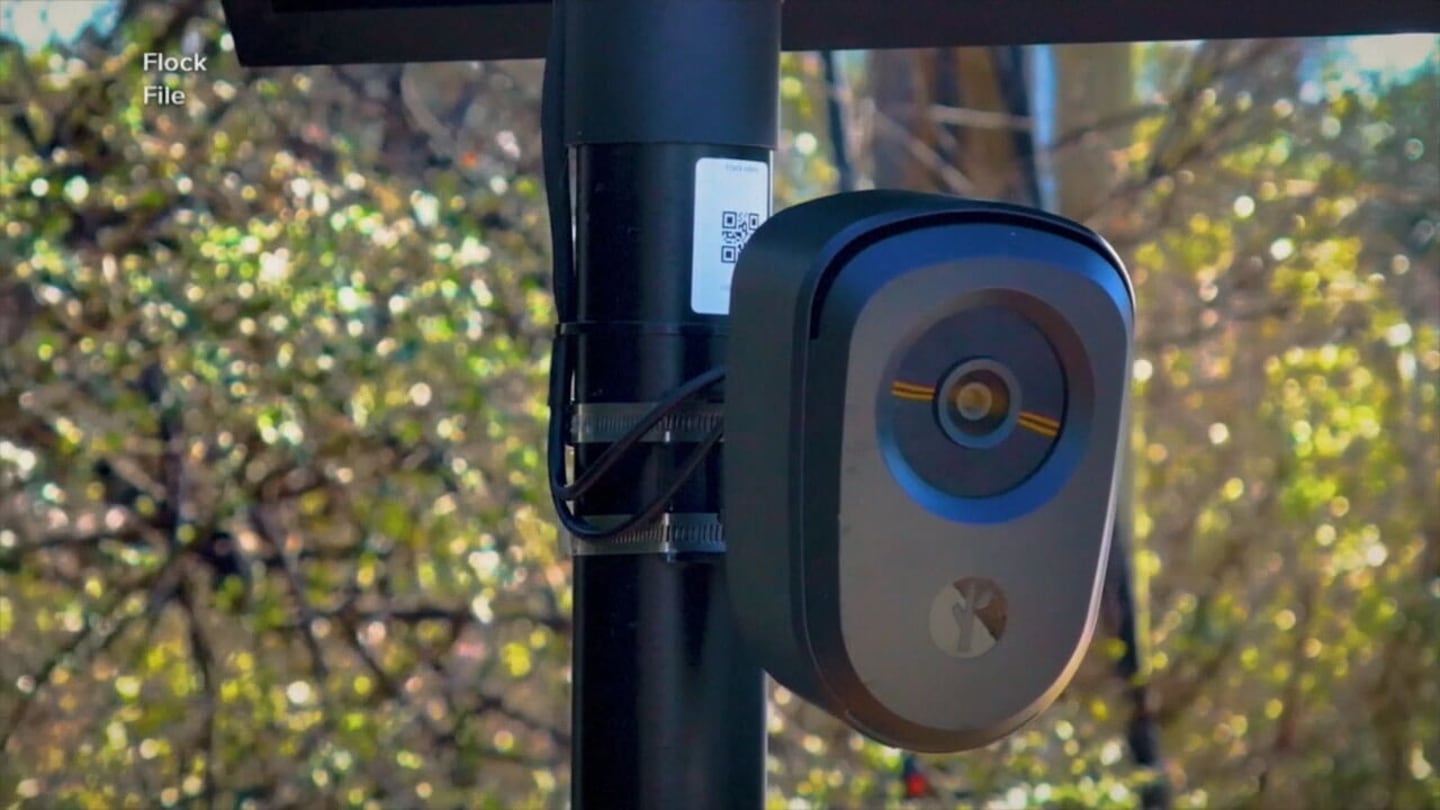
From drones to bodycams and K-9s, police have a number of tools to fight crime, but perhaps the most controversial are automated license plate readers.
Supporters say the technology gives police another way to track down suspects and missing people and investigate crimes, but concerns about misuse of the tool have skyrocketed.
Mooresville Police Chief Ron Campurciani said now-former officer Elizabeth Snowman accessed the Flock system to track her boyfriend’s ex-wife.
According to the Charlotte-Mecklenburg Police Department, former officer Seth Elliot also used the system to share information about an undercover cop with a suspected drug dealer.
READ MORE:
- Police officer accused of using Flock cameras to track boyfriend’s ex
- CMPD officer charged with misusing law enforcement databases
For Daniel Oria, these are just a few examples of why he’s concerned about the privacy risks.
“We are now collecting information on all people regardless of if they are suspected of a crime or not, and these systems are operating at a national level,” he said.
Flock Safety’s Jalen Johnson says he understands the concerns.
“People have every right to be concerned and to raise those questions,” he said. “But when it comes to misuse, we have to be very clear that Flock is just one tool out of many that officers are privy to.”
In September, leaders in Catawba County voted to remove the town’s Flock camera, pointing to the $20,000 price tag, but taking down the cameras isn’t always that simple or cheap.
Channel 9’s Erika Jackson submitted public records requests with a handful of local cities and towns to take a deeper dive into their license plate reader contracts.
Mooresville is in the middle of a five-year agreement with Flock for more than $850,000. The contract includes an “agency satisfaction guarantee.” The town can terminate its contract with Flock at any point, but it must pay up to $500 to remove each camera. The town would then get a pro-rated refund.
Gastonia is in a 10-year contract with Flock that costs taxpayers more than $10 million. Ending their decade-long agreement isn’t as straightforward. According to that contract, either side can end the agreement if the other goes out of business or has serious financial problems, but neither can break the contract if they’re simply unhappy or change their mind.
The City of Monroe has a three-year, $153,000 contract with Flock. It says if Monroe removes its cameras before the contract ends, the city still has to pay the balance.
Huntersville’s Flock contract is for two years and $133,000. Either party can terminate if the other breaches the agreement, although the violating agency has 30 days to fix the issue first.
“When a community makes a decision like that to terminate Flock you know it’s ultimately their decision, but it’s a shame at the end of the day because we again believe that everybody should feel should be safe in their communities,” Johnson said.
He believes Flock’s wins supersede any fails. He says in 2025, Flock products helped bring home more than 10,000 missing people and helped solve more than a million cases.
“The argument is not whether or not the product works,” he said. “I think that people are having a conversation about what can we do to strengthen the safeguards.”
Demonstrators gathered at Monroe City Hall in September, picketing for a moratorium to put those safeguards in place.
“I really think we need to have where we have a designated, dedicated meeting specifically for public comment to hear both concerns as well as pros and cons,” Abigail Pepper, with Neighbors United! Vecinos Unidos!, said.
While the cameras may be easy to install, getting them off the streets could be much more complicated.
©2026 Cox Media Group