CHARLOTTE — Concerns rise in McCrorey Heights as North Carolina Department of Transportation plans another highway expansion.
Sean Langley walks through McCrorey Heights and sees history, a story living in every home.
“We had a lot of African American leaders that lived in this neighborhood that were fighting to integrate Charlotte Douglas International Airport, to integrate our hospitals to integrate our schools,” he said. “Families that shaped Charlotte in so many different ways.”
Langley, president of the neighborhood association, said McCrorey Heights isn’t just home, it carries a legacy he feels obligated to protect.
“There’s a lot of pride that goes with living in this neighborhood,” he said.
Throughout that history though, Charlotte’s highway system has played a recurring role.
“It gets closer and closer,” he said.
When Interstate 77 was initially built in the 1960s when it cut through McCrorey Heights and other historically Black neighborhoods. Then came the Brookshire Freeway. The department of transportation took 12 homes through eminent domain to construct that section of highway.
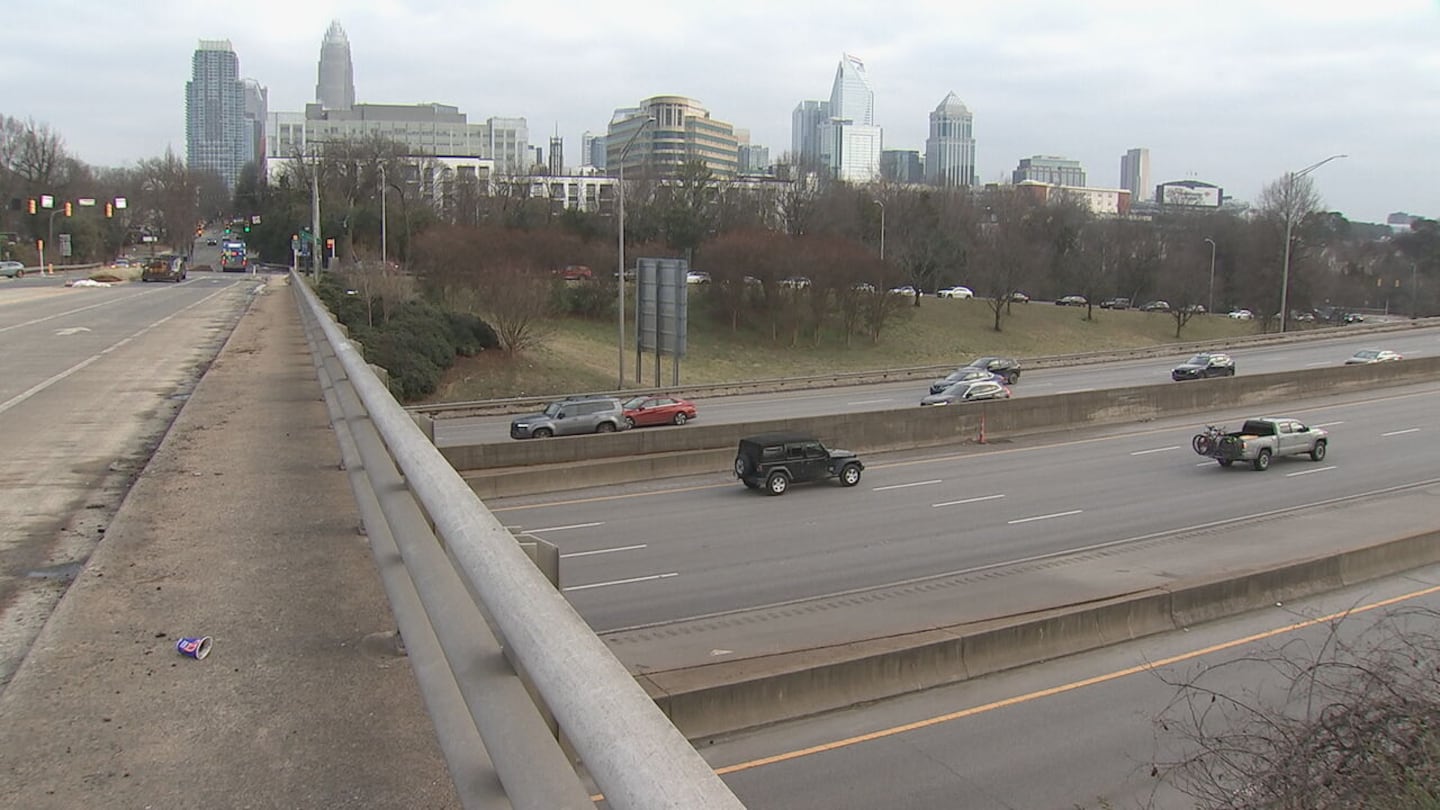
Now, as NCDOT plans another highway expansion, Langley fears the neighborhood will have to suffer the consequences for the third time.
“You hear about history, and you want to hope that you’ve learned from history but if you keep doing the same thing over and over again, that just means that you’re not cognizant of, or paying attention or learning from the historical mistakes,” he said.
For NCDOT, the I-77 expansion project has been at least a decade in the making. Felix Obregon, the District 10 engineer, explains years and years of planning and studies have shown the current design isn’t meeting the needs of the growing city.
“160,000 vehicles a day use this particular corridor,” he said. “It has unreliable travel times. You don’t know once you get on the road, how long it’s going to take you.”
He said the multi-billion-dollar project to add tolled express lanes from the South Carolina border to Uptown Charlotte should fix that, accommodating the region’s rapid growth, but designing a project that works means threading the needle through an area with very little wiggle room.
“It is a very tight corridor,” he said. “I will say 77 is the most complex project that the department has ever undertaken and it’s also the most expensive project that we’ve ever tried to deliver.”
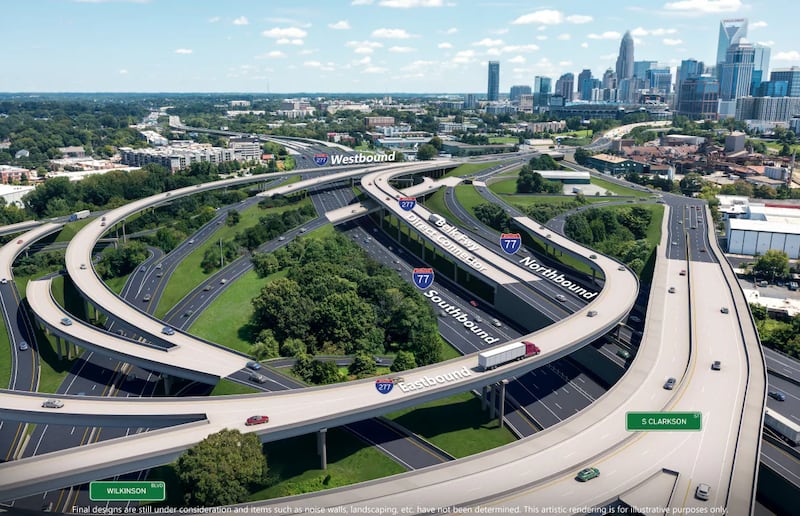
Obregon considers the latest design, elevated lanes, a compromise.
“It greatly reduces the impacts associated and really it won’t have an impact on the Wesley Heights neighborhood, Biddleville neighborhood as well as the Pinewood Cemetery,” he said. “With the elevated design, it greatly reduces the impacts on the McCrorey Heights Neighborhood.”
At this point, he said NCDOT would not need to use eminent domain on any homes in the neighborhood, but he stressed the design still hasn’t been finalized.
Langley isn’t satisfied.
“You still would have the same issue of the air pollution, the noise and it kind of disrupts our quality of life,” he said.
He doesn’t trust that homes won’t be taken as a part of the expansion and he worries the elevated lanes would still hurt property values and further separate his neighborhood from the rest of Charlotte, all for toll lanes the people who live in McCrorey Heights may never use.
Obregon said the express lanes will offer free access to CATS buses, vehicles with three or more passengers and some low-income residents. He said NCDOT is also still looking for compromises and plans to open up office hours to hear concerns as the project progresses.
“We know that this project is personal to every resident that lives along this corridor and we want to be able to have those conversations to hear their priorities and see how this project can provide a community benefit,” he said.
Langley and groups, such as Sustain Charlotte, are asking NCDOT to consider a tunnel project instead, burying the highway and reclaiming the land for the city of Charlotte, but Obregon rejected that outright as unfeasible.
“To be able to do a tunnel on this corridor, it would cost billions of dollars per mile, 10 to 20 times the capital funding that North Carolina DOT has and it would take almost 50-plus-million dollars a year to do the maintenance of that which is all of the maintenance funds that Division 10 has,” he said.
Instead, Obregon said NCDOT is looking at ways to reconnect the neighborhood to Uptown through greenways.
NCDOT has committed $600M in state dollars to the project. They’re still looking for a private partner to help fund the rest and manage the express lanes. Construction is expected to start in the early 2030s.
VIDEO: NCDOT announces $3.2B plan for elevated express lanes on I-77 in south Charlotte
©2026 Cox Media Group

/cloudfront-us-east-1.images.arcpublishing.com/cmg/LH3JSJEF3VBLRJLJQESEAG34AM.png)


