North Carolina is joining forces with six other states to buy their own tests directly from the manufacturer.
CNN reported Tuesday a bipartisan group of seven governors, including Gov. Roy Cooper, joined forces with the Rockefeller Foundation to pursue a deal for 3.5 million COVID-19 antigen tests.
This would help create the country’s first coordinated testing strategy in the absence of a national plan. Cooper said the lack of a federal plan forced him to join with other states. He said they tried to roll out more testing but ran into several problems.
It includes Maryland, Massachusetts, Ohio, Louisiana, Michigan, Virginia and Northa Carolina.
[You no longer need a doctor’s order to get a COVID-19 test in NC]
Maryland Republican Gov. Larry Hogan, chairman of the National Governors Association, negotiated the deal with the Rockefeller Foundation in "the first interstate testing compact of its kind among governors during the COVID-19 pandemic," Hogan's office said in a statement Tuesday. The 3.5 million faster-acting tests would be a significant haul as many states face surging virus caseloads and a subsequent uptick in testing delays.
Hogan, fellow Republican Govs. Charlie Baker of Massachusetts and Mike DeWine of Ohio and Democratic Govs. John Bel Edwards of Louisiana, Gretchen Whitmer of Michigan and Ralph Northam of Virginia, have all signed on to the agreement, according to the statement, and "additional states, cities, and local governments may join the compact in the coming days and weeks."
Hogan announced later Tuesday Cooper, a Democrat, would also enter North Carolina into the group.
The states involved “are in discussions” with Becton Dickinson and Quidel -- the U.S. manufacturers of antigen tests approved by the Food and Drug Administration -- “to purchase 500,000 tests per state,” according to the release.
>> Have questions about the coronavirus pandemic and its impact on the Carolinas? We have an entire section dedicated to coverage of the outbreak -- CLICK HERE FOR MORE.
Most coronavirus tests look for the virus' genetic material, require several chemicals -- many in short supply -- to operate and can take hours to run. Antigen tests, meanwhile, are simpler and potentially less reliable but they can provide results in a matter of minutes.
Health experts have for months called for faster testing results to effectively track the virus' spread, and some states, labs and public health departments are reporting that turnaround times for diagnostic testing have slowed. CNN reported last month on some test results taking an average of four to six days for the general population or, in states like Arizona, up to three weeks.
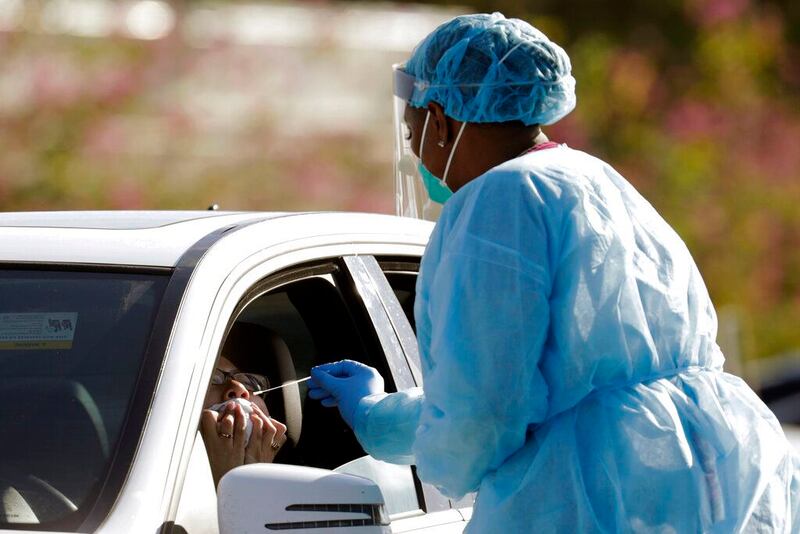
“We wish there had been a federal testing strategy,” Cooper said. “In North Carolina, we’ve worked very hard to get testing out, but we find problems with supply chain, we find problems with PEE. As governors, we’ve had to step up and do the job.”
The states’ compact also comes following the British government’s procurement of ”millions” of coronavirus tests that can provide results in under 90 minutes and detect several other common viruses, the UK’s Department of Health said Monday.
Hogan warned last month that coronavirus testing shortages and delays could make the pandemic even worse.
Cox Media Group
/cloudfront-us-east-1.images.arcpublishing.com/cmg/LH3JSJEF3VBLRJLJQESEAG34AM.png)


