
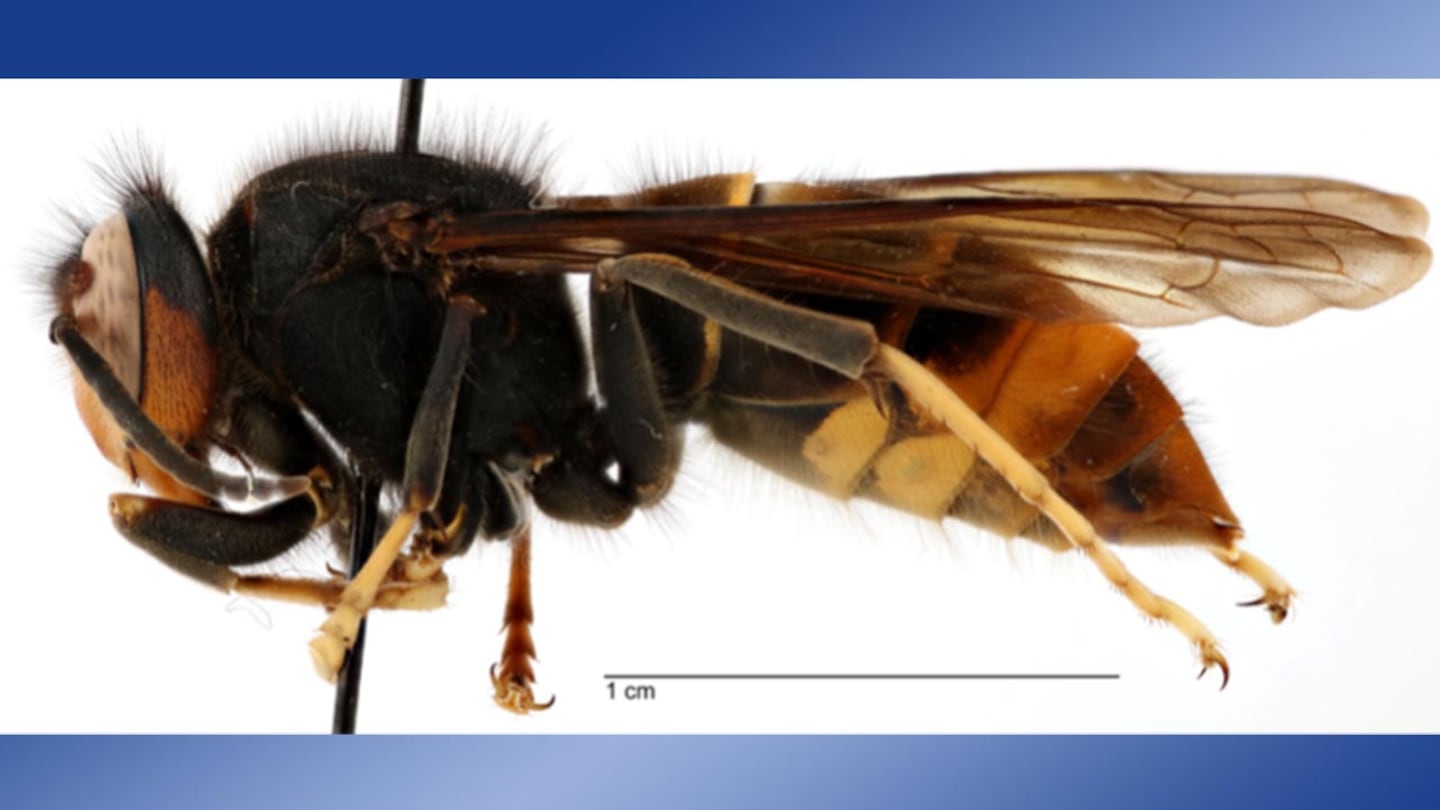
YORK COUNTY, S.C. — There’s a new threat to honeybees in the Charlotte area. The invasive yellow-legged hornet has been discovered in York County for the first time.
Originally from Asia, the yellow-legged hornet preys on honeybees and has been devastating to hives in Europe where the pest is more common. While not harmless to humans, its threat level is same as other local hornet species like yellowjackets.
Its first known sighting in the United States was November of 2023 in Savannah, since it’s expanded its territory to Beaufort and Jasper counties in South Carolina.
Brad Cavin, the South Carolina apiary inspection program coordinator, has been monitoring the pest’s spread in South Carolina. He said he and his fellow researchers with Clemson University were alerted to a possible hornet sighting in York County at the end of November.

The yellow-legged hornet typically “hawks” or sets itself up right outside of a honeybee hive and waits for forager bees to return. Then it will attack the returning bees, kill them and take them back to the nest to feed its young.
“The beekeeper noticed the hornet flying in their apiary, was able to capture the hornet and reported the hornet to the week of Thanksgiving,” he said.
Cavin then traveled to York County to set his own traps and verify the presence of a hornet’s nest in the area. From there he followed a hornet back its nest and destroyed it, sending some of the material for genetic testing to try and determine from where these hornets may have come.
“It’s an invasive species, and invasive species find ways to hitchhike through many different pathways,” he said.
The news was unsettling for beekeepers in the region. Dennis Lintz, the president of the Chester County Beekeepers Association said he expected the yellow-legged hornet would eventually make it to the region but not this quickly.
“We were thinking it’s years before we thought it would be around here,” he said.
Without a clear way to keep local hives safe, Cavin said the best protection right now is good information. Beekeepers should set up traps near their honeybee hives and report any sightings to the South Carolina portal.
Over the winter, he said the hornets will go dormant but it’s possible queens could come out to try and start new nests in the spring. That’s why he said he and his team will be out in the area setting traps to try and prevent future nests.
“Every hornet that we can get trapped out early in the spring should be a yellow-legged hornet queen, he said. “Every queen that’s out means there’s not going to be a potential nest next year.”
The pest has not been spotted yet in North Carolina, but given how close the recent sighting was to the North Carolina border, state apiarist Don Hopkins said he’s planning an educational and trapping campaign for the Charlotte area for the spring as well, reminding beekeepers to report any possible sightings to the North Carolina reporting tool.
Until we know the extent of the hornet’s presence in the region, Cavin said it’s difficult to know what the impact could be, but given the impact of other threats to bee colonies like climate change, verroa mites and shrinking habitats, the hornet joins a list of major threats that could ripple through the ecosystem.
“Honeybees play a crucial role in pollination and agricultural crops, where, you know, more pressure and more losses of honeybees mean a reduction in crop production,” he said. “And so what the impact of agriculture is a pretty important question, and given that the hornet preys on honey bees, there could be some significant issues that the beekeeping industry in the country has to deal with.”
VIDEO: Bill banning shrimp trawling along NC coast passes Senate

©2025 Cox Media Group

/cloudfront-us-east-1.images.arcpublishing.com/cmg/LH3JSJEF3VBLRJLJQESEAG34AM.png)


