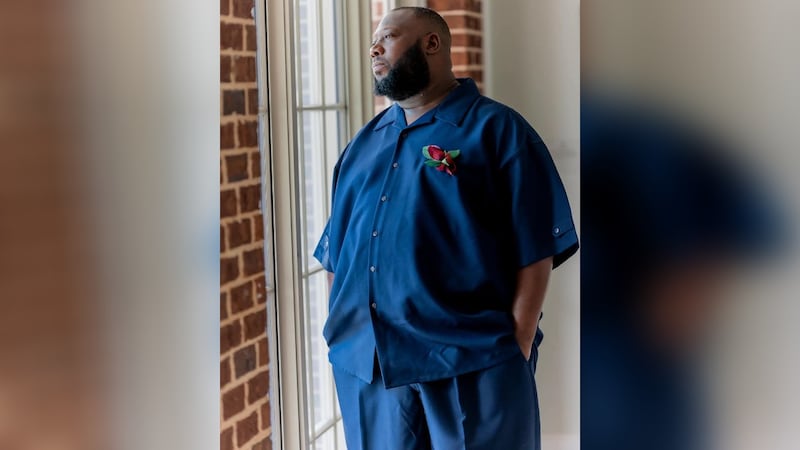
MECKLENBURG COUNTY, N.C.,None — After spending more than two years behind bars, a Huntersville man walked free from the Mecklenburg County Jail just days ago.
Michael Cherry's charges of rape, kidnapping and robbery all were dismissed.
The Mecklenburg County District Attorney's Office said there were serious issues with how the Cornelius Police Department handled evidence at the crime scene.
In October 2009, Cherry was arrested and charged with rape, robbery and kidnapping in connection with an attack at a home.
After Cherry spent 27 months behind bars, the district attorney dropped all those charges Jan. 12.
"Everybody saw on the news and in the newspaper where I was charged with all these 'Law and Order' heinous crimes," Cherry said. "Nobody was able to see where these charges was dismissed for the simple fact that there's no evidence against me. I was falsely accused from the start."
According to court documents, Cornelius police tied Cherry to the scene from DNA found on a vodka bottle at the victims' home.
But in its dismissal, the District Attorney's Office said there were "multiple inconsistencies in police statements over when this item was collected and by whom it was collected. There are also numerous people who could have had contact with the item after the crime took place and before it was collected by the police."
In addition, the district attorney said the victims were blindfolded during much of the assault and no one could identify Cherry in a photo lineup. There was no male DNA found on the female rape victim to compare to Cherry.
Eyewitness News asked Cornelius police about the district attorney's dismissal and the concerns about they way officers handled the case.
In a statement, Chief Bence Hoyle admitted there were errors but said the item was collected properly.
"The inconsistencies are an erroneous recollection by one of the officers in the collection of evidence," Hoyle said.
Hoyle said the department is creating new policies that limit the number of officers handling evidence at crime scenes to prevent similar issues.
The chief also said another issue didn't involve police errors, but a witness handling a key piece of evidence.
Cherry offered his thoughts on how the case was handled.
"The whole time they got me sitting here as being the one who committed this crime, and if it did happen, the people they should be looking for are still running around free," Cherry said.
Civil rights activist John Barnette helped Cherry get a new attorney and launched the fight for his freedom. Barnette said they plan to file complaints and a civil suit against the officers involved in the case. Barnette and Cherry plan to start a legal defense fund to help other inmates who are fighting to prove their innocence.
Statement from the District Attorney on the voluntary dismissal:
There is insufficient evidence to prove beyond a reasonable doubt the identity of the defendant as a participant in this crime.
All victims were blindfolded for most of the assault. The description the victims were able to provide did not match the defendant. No victim was able to identify this defendant from a photo lineup.
The female victim described her rapist as having a scar on his right cheek. The defendant does not have a scar on his cheek.
There is no male DNA found on the female victim to compare to the defendant. The only identification of the defendant as one of the perpetrators of this crime is that his DNA was found on an item left on scene. There are multiple inconsistencies in police statements over when this item was collected and by whom it was collected. There are also numerous people who could have had contact with the item after the crime took place and before it was collected by the police. This calls into serious question the chain of custody on the item.
The suspects wore latex gloves. They also stole a truck from one of the victims. There is a partial DNA profile from the steering wheel of the truck that is consistent with the full DNA profile that matches the defendant. Given that all suspects are said to have worn gloves, the State does not have evidence to support why or how a suspect could leave any DNA on the steering wheel of the car. It is feasible the defendant left his DNA on both items at another time unrelated to this crime.
Statement from Cornelius Police:
Thank You for the opportunity to respond. Indeed, there were errors. The inconsistencies are an erroneous recollection by one of the officers in the collection of evidence. This item of evidence was collected properly, and the officer in question was involved along with another officer in processing the evidence into storage. When completing his report on that matter, he used the words "collected" instead of processed, which would have been more accurate. In a later statement pending trial, he again stated he collected the evidence, and in fact believed he had.
Our investigation determined his statement was wrong, and while that is clear and all officers involved in this case clearly remember the events correctly except him, because of his written statements and continued recollection as indicated, it nonetheless creates a problem at trial.
The other issue with the collection of evidence did not involve police errors. A witness had handled a key piece of evidence. I can't elaborate on that in detail because this case is still open.
None of these issues are serious enough to harm this case in and of themselves - although it could have been and we have taken measures to prevent it in the future. Specifically we have changed the way we process to limit the number of officers handling evidence, thus limiting the chain of custody. We had this issue primarily because very large crime scene cases required a lot of people, but we have instituted new policy to manage that.
Finally, I should point out that this case has more profound issues. As indicated, none of our witnesses could pick out the correct defendant in this case, and physical characteristics of the suspect later did not match the description. Despite very strong feelings by some witnesses that Mr. Cherry is the suspect, there simply is not enough corroboration between the evidence and those statements to proceed.
I agree with the decision of the District Attorney completely.
WSOC
/cloudfront-us-east-1.images.arcpublishing.com/cmg/LH3JSJEF3VBLRJLJQESEAG34AM.png)