
District 10 includes Lincoln, Catawba, and Iredell counties in the United States House of Representatives.
Republican candidate Pat Harrigan is running to maintain the spot he claimed last year. Ashley Bell is running on the Democratic side.
Libertarian Steven Feldman will also appear on the ballot.
Pat Harrigan (R)
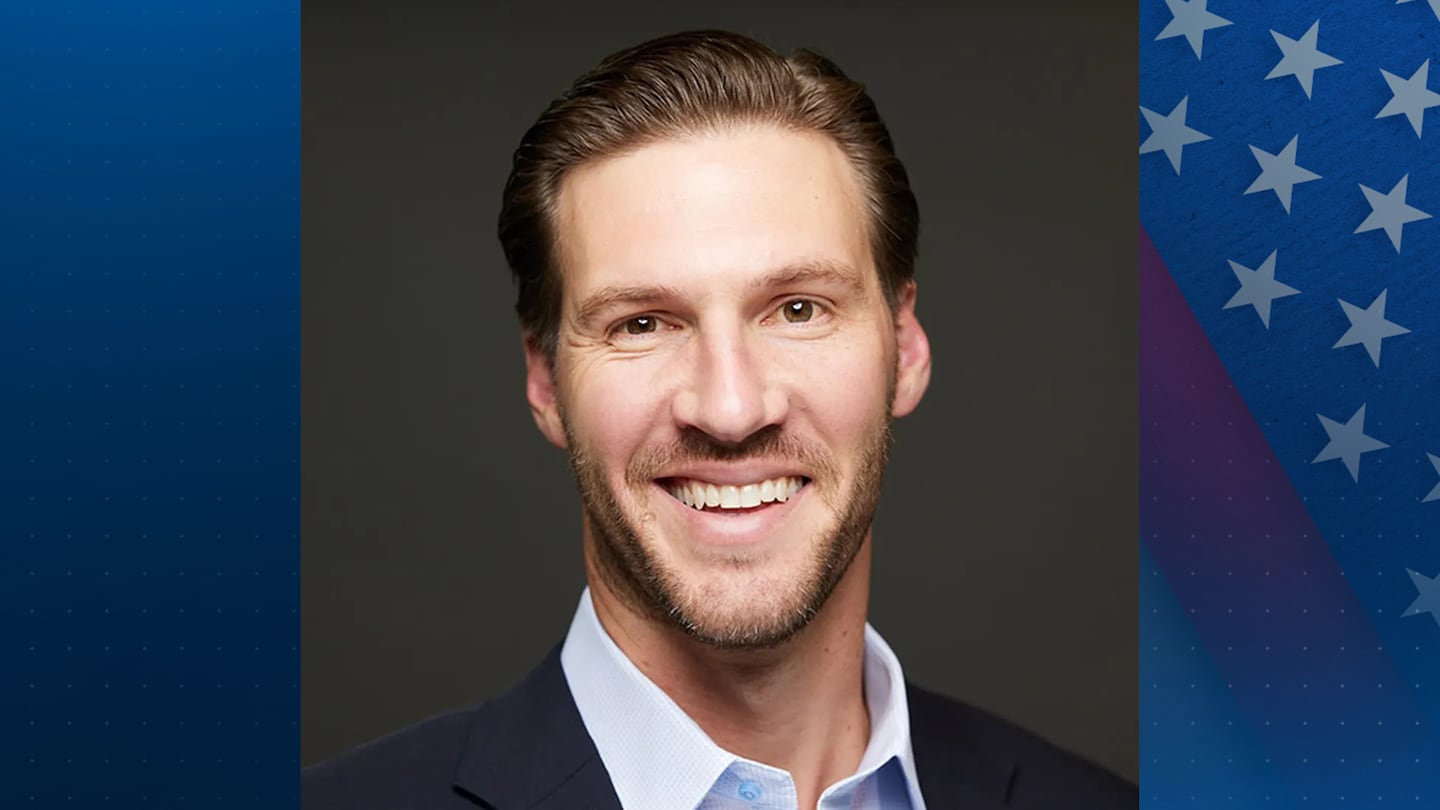
Why are you running?
I never intended to go into politics.
Rocky and I were raising our two girls in North Carolina, and we’d built a successful manufacturing business from the double-wide trailer where we started out.
Then I watched Afghanistan fall in 2021, and that changed everything for me.
I’d spent more than 18 months fighting there, and I knew what so many Americans had sacrificed over those twenty years.
But what really bothered me was the realization that the decisions coming out of Washington were making another generation of conflict more likely.
I’ve always believed that if you want to avoid war, you have to be strong enough to deter it.
And when we do send Americans into combat, we owe them clear objectives, the equipment they need, and a strategy to win.
I thought about my daughters and the country they’d grow up in, and I decided I had a responsibility to do something about it.
Nearly two years into Congress, that’s still what drives me, and I’ve been able to turn a lot of those concerns into actual legislative work.
I’ve helped advance reforms that give our military more control over repairing its equipment, strengthen American defense manufacturing, and reduce our dependence on Chinese technology.
And back home, my office has helped North Carolinians recover more than $20 million through constituent services.
I want to keep building on that work because the decisions we’re making today will determine the country our children inherit.
Is it time for the Iran war to end?
We’ve accomplished much of what we set out to do militarily in Iran, and the question now is how we turn those successes into a lasting strategic outcome.
As I said in my answer about why I ran for Congress, the fall of Afghanistan had a profound impact on me. I spent more than 18 months fighting there, and I came to Congress determined to make sure we learned the lessons of the last twenty years of war.
One of those lessons is that you cannot fight a limited war indefinitely and expect unlimited results.
That’s the concern I’ve been raising about Iran for months. We’ve significantly degraded the regime’s military capabilities, but we’re now in a stalemate. Iran can still threaten American forces and disrupt shipping through the Strait of Hormuz, and the longer this continues, the more time works in Iran’s favor. Eventually, simply surviving becomes a victory for the regime.
I believe President Trump was right to confront the Iranian threat, and our military has accomplished a great deal. But those successes have brought us to a point where we need to make a decision about how this war ends.
We either use decisive military force to achieve the specific objectives that remain, or we recognize what we’ve accomplished, declare victory, and bring our military involvement to a close.
I have no interest in committing American ground forces to occupy Iran, and I don’t believe continuing to trade limited strikes indefinitely will fundamentally change the strategic picture. We have significant economic leverage that can be used to keep pressure on the regime after the military campaign ends.
The United States has already demonstrated its military strength. Now we need to make a clear strategic decision and bring this conflict to a successful conclusion.
What legislation will you pursue to bring down costs?
I think we have to be honest about why so many Americans are struggling to get ahead.
Families are working hard, but the cost of owning a home, raising children, and running a household has risen faster than many of their paychecks. And when I think about the opportunities Rocky and I had when we were starting our business, I worry about whether our daughters’ generation will have those same opportunities.
I was proud to help pass President Trump’s Working Families Tax Cuts, which made lower individual income tax rates permanent, increased the child tax credit to $2,200, and provided new tax relief for tips and overtime. That gives working families more room in their budgets, and protecting those savings will remain a priority for me.
But we also need to address the underlying reasons so much of what Americans buy has become expensive.
I spent years running a manufacturing business, and I know that when it costs more to produce something, it eventually costs more to buy it. Energy is a good example. If a factory pays more for electricity, that cost gets built into the products it makes. If a trucking company pays more for fuel, it costs more to deliver those products to stores. And ultimately, the family buying groceries or household essentials ends up paying for all of it.
That’s a major reason I’ve focused on increasing America’s supply of affordable, reliable energy. I’ve introduced legislation to help nuclear power customers receive the benefits of federal tax credits sooner, and supported efforts to move more electricity through the power lines we already have. I want to continue removing the barriers that make it unnecessarily expensive to produce and deliver American energy, because the benefits extend well beyond the monthly utility bill.
We need to take a similar approach to housing. The median first-time homebuyer is now 40 years old, and a big part of the problem is that we haven’t built enough homes to meet demand. I want to make it easier and less expensive to build, while advancing my Families First Housing Act, which would give individual buyers an opportunity to purchase certain federally backed foreclosed homes before institutional investors.
And we cannot have a serious conversation about affordability without addressing Washington’s spending problem. We’re more than $40 trillion in debt, and we’re spending roughly $1 trillion a year just paying interest on money we’ve already borrowed. That limits our ability to invest in the things the country needs, while continued federal borrowing can put additional pressure on the financing costs families and businesses face.
As I’ve said before, we cannot cut our way to prosperity. We need to make responsible spending decisions while growing an economy that produces more American energy, more homes, more manufactured goods, and more good-paying jobs.
That’s where I want to focus my legislative work. I want families to keep more of what they earn, and I want the economy to produce enough of what they need that everyday expenses become more manageable. When people work hard and make responsible decisions, they should have a realistic opportunity to build a future for themselves and their children.
How would you assess President Donald Trump’s second term so far?
President Trump has made it a priority to secure our border, protect American sovereignty, reduce our dependence on China, and bring manufacturing and good-paying jobs back to the United States. I’m proud of the progress we’ve made toward those goals with a Republican Congress.
When you compare where we are today with where we were four years ago, there are some substantial differences. We’ve seen a dramatic reduction in illegal border crossings, passed tax relief for working Americans, and made progress improving services that millions of Americans depend on.
The VA is a particularly good example. During the Biden administration, the disability claims backlog increased by 24 percent. Since President Trump took office, that backlog has fallen by more than 70 percent, and average processing times have dropped from 141 days to about 76. As a veteran, I care deeply about those results, and I want to see that progress continue.
Closer to home, I’ve been encouraged by the administration’s commitment to rebuilding western North Carolina after Hurricane Helene. Federal highway recovery funding for our state has reached $2.9 billion, including a record $1.15 billion allocation announced last year. There are still roads, bridges, homes, and businesses that need to be rebuilt, and I want to make sure the federal government follows through until those communities are back on their feet.
I also think we’ve made important progress in recognizing how much America’s economic strength depends on our ability to produce things here at home. North Carolina has attracted major new investment commitments, including a proposed $4.7 billion aircraft manufacturing facility in Greensboro. The opportunity now is to turn those commitments into construction, permanent jobs, and stronger local economies.
But I also recognize that there are serious challenges ahead. Families are still feeling the effects of high prices, and too many young Americans are struggling to afford their first home. We’re carrying an enormous national debt, and we need to make sure the economic growth we’re pursuing translates into greater financial security for working families.
I think the president has helped put the country on a stronger footing in several important areas, and I want to continue working with his administration to build on that progress.
For me, the next two years are about following through. That means completing the recovery in western North Carolina, continuing to improve federal services, bringing more investment and good-paying jobs into our communities, and addressing the financial pressures that families are still facing.
We’ve accomplished a great deal together, and there’s more work to do. I intend to keep doing my part in Congress to make sure North Carolina sees the benefits.
What sets you apart from your opponents?
I’ve spent enough of my life dealing with the consequences of other people’s decisions to know that good intentions don’t make a bad decision any less dangerous.
I’ve commanded soldiers in combat, studied nuclear engineering, built a manufacturing business, and raised two daughters with my wife. In every one of those parts of my life, I’ve learned the same lesson. You can make all the promises you want, but eventually somebody has to make the numbers work, somebody has to carry out the plan, and somebody has to answer when things go wrong.
I look at some of the proposals coming out of Washington, and I wonder whether the people making them have thought seriously about what happens the morning after they’re enacted.
You can promise to transform the entire energy system, but when a manufacturer needs affordable electricity to keep a factory running, somebody has to explain where that power is coming from.
And you can promise another trillion dollars in federal spending, but the money has to come from somewhere. Eventually it comes out of somebody’s paycheck, somebody’s savings, or the opportunities their children will never have.
I believe Americans deserve a government that can secure its borders, defend the country, protect their constitutional rights, and carry out its responsibilities competently. I believe people who work hard should be able to afford a home, raise a family, and build something of their own. And I believe we have an obligation to leave the next generation a country that’s stronger than the one we inherited.
Those convictions come from experience.
When you’ve been responsible for the lives of American soldiers, you understand the cost of poor judgment. When you’ve built a business, you understand that money is finite and every decision has a trade-off. And when you’re raising two daughters, you understand that the consequences of today’s decisions will outlive the people making them.
I don’t expect everyone to agree with me on every issue. But I do expect the people entrusted with running this country to understand the weight of that responsibility.
Because when Washington gets something wrong, the people who made the decision usually get another chance to explain themselves.
The families who pay the price don’t always get another chance.
Ashley Bell (D)

Why are you running?
I’ve spent 16 years working in healthcare, watching people make impossible choices between insulin and rent, and watching insurance companies get between patients and care. Rural hospitals are closing, prices keep climbing, and the people in Washington say they’ll fix it and don’t. I’m a clinician, not a career politician. My job has always been to listen, diagnose the problem, and treat it.
Is it time for the Iran war to end?
Yes. Congress never voted to authorize this war, and families here are paying for it at the gas pump while our service members carry the risk. Bring the troops’ mission to a defined end, bring Congress back into its constitutional role, and put diplomacy first. I’ll vote to stop the war and lower gas prices.
What legislation will you pursue to bring down costs?
- Health care: Make insurance pay and then get out of the way. That means cracking down on claim denials and prior-authorization games, and I support moving toward Medicare for All.
- Minimum wage: Raise the minimum wage. This is long overdue, and was last increased 17 years ago.
- Housing and energy: Back affordable housing supply and bring down gas prices by ending the war.
- Data centers: A moratorium on turning our communities into data center sites, which drive up power bills and land costs.
- Social Security: Save and strengthen it. Remove the wage gap.
- Money in politics: Get big donor money out so Congress answers to us, not to the highest bidder.
How would you assess President Trump’s second term so far?
His second term has been an unmitigated disaster. He promised to bring down costs on day one, never to start another war, and he broke those promises immediately upon reentering office. Now, Trump has entered us into a collaboration with Putin and Russia for oil, which funds their war on Ukraine, and weakens our position both with Russia and Iran.
My opponent Pat Harrigan who is currently in office has supported each and every one of Trump’s decisions, voting with Trump policies 100% of the time, despite clear evidence that they are hurting his constituents. He supports Pete Hegseth’s disastrous actions with our military. He has refused to speak out against any of these decisions, even though he has the experience that would suggest he knows better. He voted to strip thousands in our district of their healthcare, and has voted to continue the war in Iran four times.
What sets you apart from your opponents?
I am a working class individual just like everyone else in NC-10. For most of this campaign I was working four jobs, cutting down to two jobs only a few months ago in order to have more time for the campaign. I struggle to make ends meet and I see the impact that bad policies have on people. While other politicians just talk about healthcare, I live it with my patients every day. I see the impact that bad or no healthcare has on patients, and I see the impact that for-profit greed in healthcare management has on healthcare workers.
I am completely grassroots - regular people funded, unlike my opponent who is corporate money and military industrial complex funded. I don’t own/operate a business that manufactures automatic weapons during a time of war like Pat Harrigan, and unlike him, I didn’t have to ask for extensions on filing my financial disclosures with the House clerk in order to figure out how to hide a 9 million dollar net worth increase after less than 2 years in office.
I also speak up when I find corruption - a few years ago, my reporting to the US Dept of Education and the Wall Street Journal led to the bankruptcy of a 5 billion dollar company that was falsifying reports and stealing money from universities and students - and I will expose corruption in DC as well, unlike my incumbent opponent.
Steven Feldman (LIB)

Why are you running?
I’m a physician, not a politician. My views are rooted in conservative values, and medicine has taught me the importance of seeing things from other people’s perspectives. Like most, perhaps all, Americans, I want to leave our children a country that isn’t drowning in debt and a culture that rejects violence as a response to problems, at home or abroad. Americans share many goals; we often differ only in how best to get there. And even though it may not seem like it at times, people in other countries want peace and security for their children, just as we do. In Congress, I would model civility, work across divides, stop deficit spending, seek peace peacefully, and let people live their lives as they wish, as long as they do no harm to others.
Is it time for the Iran war to end?
It is past time for the Iran war to end. It should not have started in the first place. We should defend our borders and not meddle in other countries. Iran— proud of its history of civil rights that preceded the Magna Carta by over a thousand years— should be our friend, not an enemy. Here’s some context that may explain how Iran’s leadership perceives us. In 1953 our CIA helped overthrow their elected prime minister, installed the Shah as dictator, and then supported the dictator and his dreaded secret police, the SAVAK, for 25 years. In the 1980s, we backed Saddam Hussein’s war on Iran that killed hundreds of thousands of young Iranians, and we helped him use chemical weapons on Iranian troops. Since then, we’ve imposed sanctions on Iran that made Iranian families suffer. We may have meant well, and I would not want to live under their regime, but I don’t think they hate us for our freedom. The best way to influence and help them is to be a better role model, not to inflict more violence and suffering.
What legislation will you pursue to bring down costs?
Peace at home and abroad to start; Congress should not fund undeclared war and should, according to our Constitution, approve war before it happens. I would pursue making Medicare and Medicaid high-deductible health plans to bring market forces to bear, which will reduce medical prices. Congress should give Americans back the freedom to choose to buy their medications at low cost from other countries; that freedom would come with the responsibility to make wise choices. We should eliminate well-intended regulations whose unintended consequences make the costs of everything higher. We should trade freely with other countries. Supporting nuclear power would help bring down energy costs. We must eliminate deficit spending, which causes inflation. The federal government spends far too much on everything; we shouldn’t need to spend as much as the next 8 or 9 countries combined on our military to defend our borders, especially considering we’re surrounded by two oceans and two friendly countries.
How would you assess President Donald Trump’s second term so far?
My two major concerns are fiscal responsibility and peace. Our country is drowning in debt, and the President’s “big beautiful bill” increased deficit spending. I’m sure the President seeks a more peaceful world, but he has used and supported violence to do it. He doesn’t model civility. We must leave our children a better, safer, more financially secure country than we inherited from our parents. To do that, we need to promote civility, even or especially with those we disagree with. We need to stop deficit spending, and we need to seek peace peacefully. The President’s second term has not been effective in those regards.
What sets you apart from your opponents?
I don’t have opponents. We have three terrific human beings seeking to be elected to the US House in NC’s 10th congressional district. They care as much as I do about leaving our children a stronger nation and a more peaceful world, and they’ve devoted more of their lives to public service than I have. In contrast to our incumbent Congressman Pat Harrigan— who is a smart, caring patriot—I would promote seeking peace through being peaceful, securing our borders instead of attacking others, and being a better role model for other countries to follow. In contrast to the other excellent candidate, Democrat Ashley Bell— who is an accomplished health care professional and who sees how broken our health care system is— I believe the fix to our health care system is using market forces to bring down prices, not more regulation and more government involvement.
©2025 Cox Media Group


