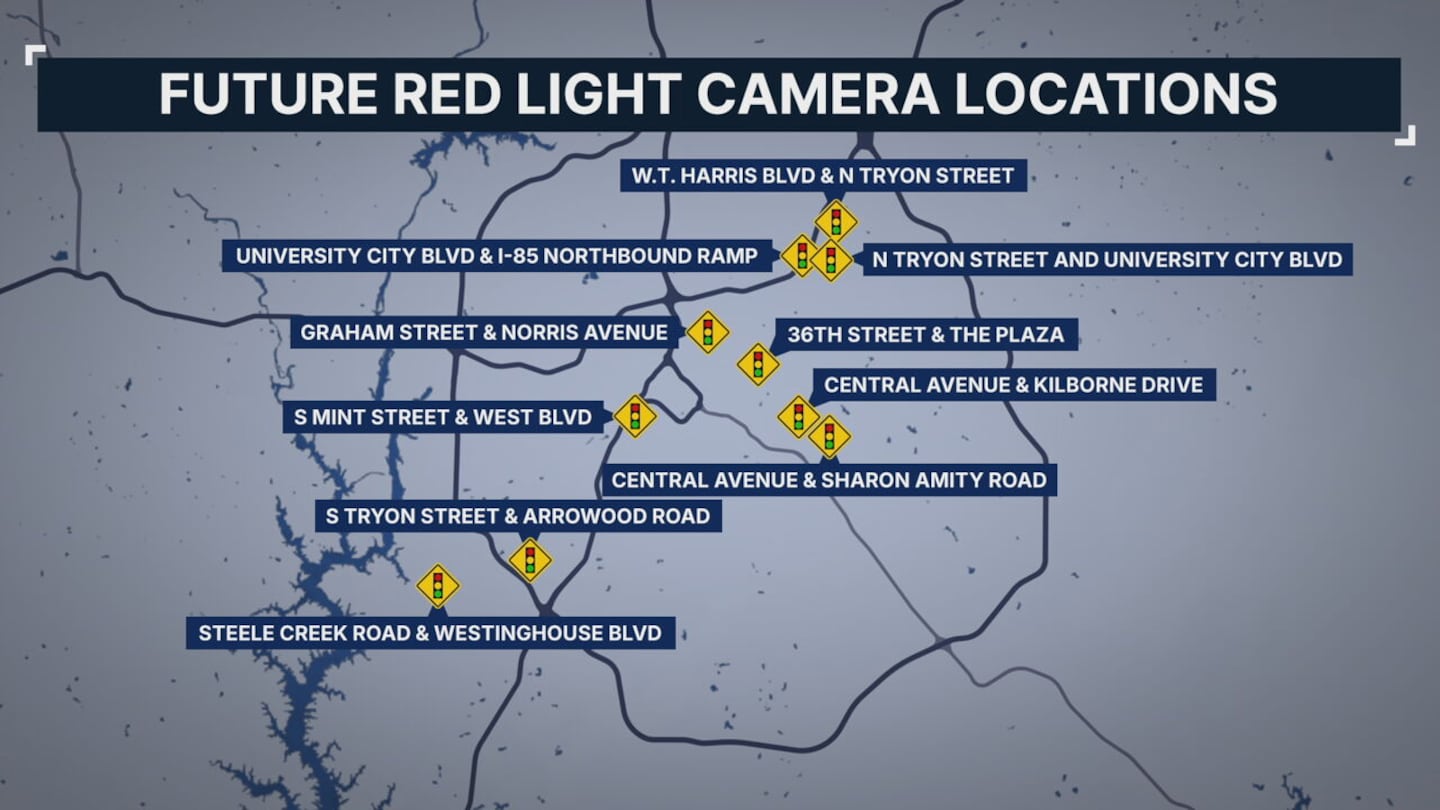
CHARLOTTE — Charlotte will implement a red-light camera pilot program at 10 intersections for the first time in 20 years.
The program is expected to begin in 2027, with drivers caught running a red light facing a $75 fine.
The initiative follows the death of Lance Sotelo, who was killed at one of these intersections in January.
His mother, Jeanne Sotelo, hopes the new program will enhance safety and prevent future tragedies.
Sotelo, mother of Sotelo, described receiving the news of her son’s death. “That phone call was the worst phone call I ever had,” Sotelo said.
Sotelo was killed in January at the intersection of The Plaza and 36th Street when a woman reportedly ran a red light and hit him while he was out for a run. He was a cross-country runner who graduated from Queens.
Sotelo said Lance left behind a legacy of bravery, kindness, and love. “He never met a stranger. And if he met a stranger, within 5 minutes, you were not a stranger anymore,” Sotelo said.
In his memory, Lance’s parents established Lance’s Legacy, a scholarship that helps others achieve their dreams.
The first scholarship was awarded this year to a runner who graduated from Lance’s high school in Georgia.
Sotelo believes the red-light pilot program could be another part of her son’s legacy, making intersections safer.
“We were excited about the potential of what happened because I know that it definitely is needed,” Sotelo said.
The pilot program is scheduled to run for 12 months, with a camera placed at each of the 10 selected intersections.
While Sotelo views the cameras as a positive initial step, she suggests additional measures are needed for comprehensive safety.
“They need raised crosswalks for pedestrians; the raised crosswalks look almost like a speed hump. The signs for pedestrians with the flashing lights,” Sotelo said.
Charlotte City Council member JD Mazuera Arias, representing District 5, voted to approve the pilot program.
Arias clarified that the intersections chosen for camera installation were based on crash statistics rather than targeting specific communities.
He also provided assurances that the cameras would not be utilized for purposes beyond documenting traffic violations.
“I am committed to not expanding a surveillance state, as some folks have stated it to be. These cameras are not connected to facial recognition, immigration enforcement, or any general surveillance system. They are used and simply limited to document violations at certain intersections,” Arias said.
The red-light camera program is expected to be operating at the selected intersections near the beginning of 2027.
©2026 Cox Media Group

/cloudfront-us-east-1.images.arcpublishing.com/cmg/LH3JSJEF3VBLRJLJQESEAG34AM.png)


